“Free Quakers, Founding Fathers, and Native Americans: Ned Buntline’s Nativist Historiography,” Will Fenton

I have chosen to open my talk for the fifth biennial conference of C19 for public comments given that flight delays will prevent me from receiving your suggestions and questions in-person. Thank you in advance for your generosity. -Will
Evocations of patriotic duty and hollow appeals to unity are well-worn grooves in nativist propaganda. Most recently, President Trump weaponized allegiance to authorize his nativist agenda in his inaugural address. “At the bedrock of our politics will be a total allegiance to the United States of America, and through our loyalty to our country, we will rediscover our loyalty to each other,” said Trump. “When you open your heart to patriotism, there is no room for prejudice.”
Today, I want to revisit a milestone in American nativism: the mid-1850s, when the issue of slavery tore the two-party system asunder. I will focus on one of its leaders, a Trumpian figure named Col. Edward Zane Carroll Judson—better known by his nom de plume “Ned Buntline”—often credited with founding the Know Nothings. Buntline participated in the Astor Place Riot and played a key role in the nationalization of the Know Nothings, transforming a network of secretive lodges into a short-lived political party called the Native American or American Party. That party rocketed to national prominence in the 1854 midterms and crashed back down to earth with the 1856 presidential election.
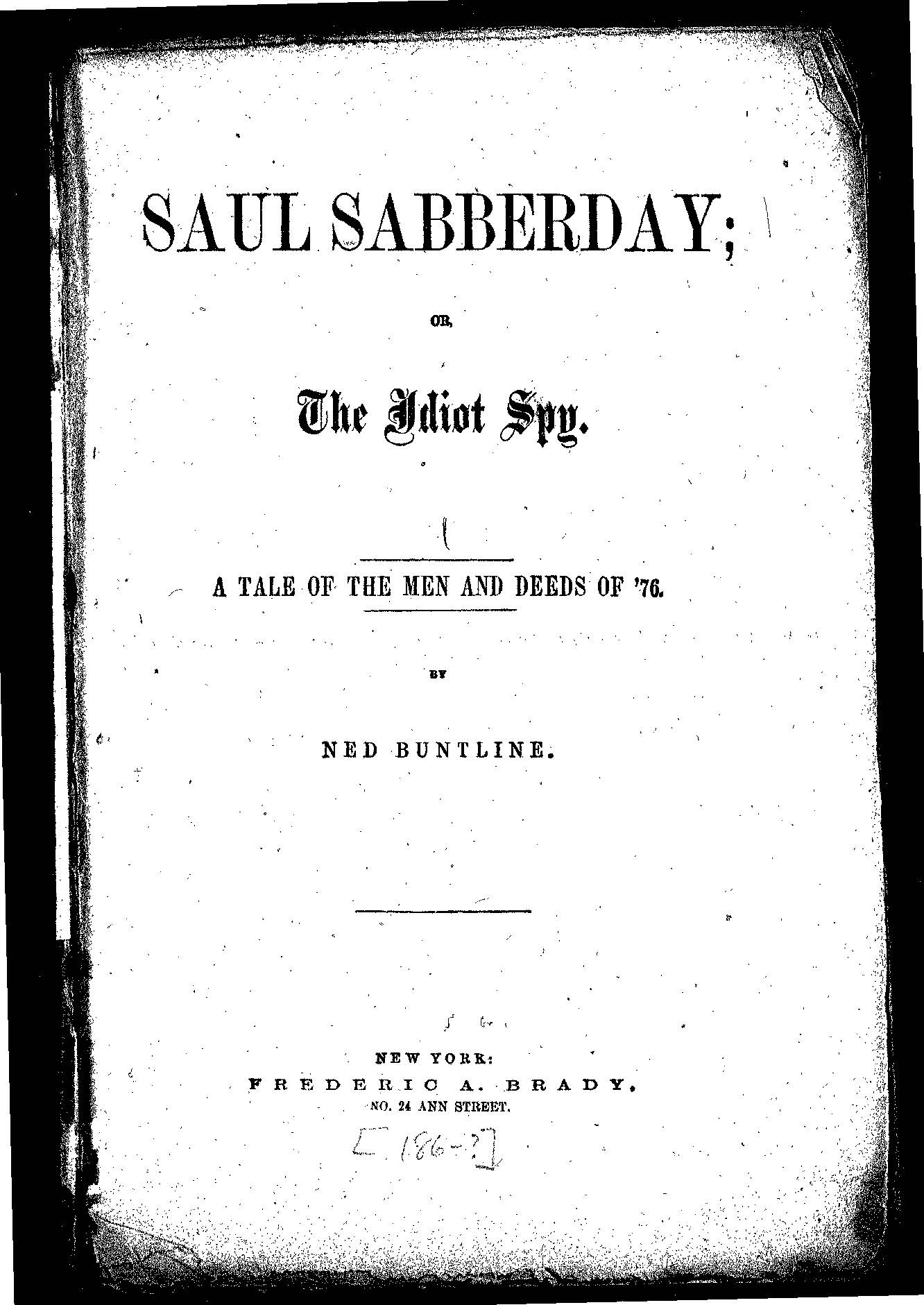
In addition to being a rabble-rouser, political activist, and journal editor, Buntline was also a prolific writer of sensational fiction. He penned dozens of shilling shockers—later called dime novels—and popularized William Cody, aka “Buffalo Bill.” Today, I consider one of those novels, Saul Sabberday, or, the Idiot Spy (1858), which I situate in the context of archival research from the American Philosophical Society and Library Company of Philadelphia. Namely, I want to think about how Buntline coopts the myth of fighting Quakers to reformulate nativist ideology. That’s right, fighting Quakers. More on that shortly.
Ned Buntline
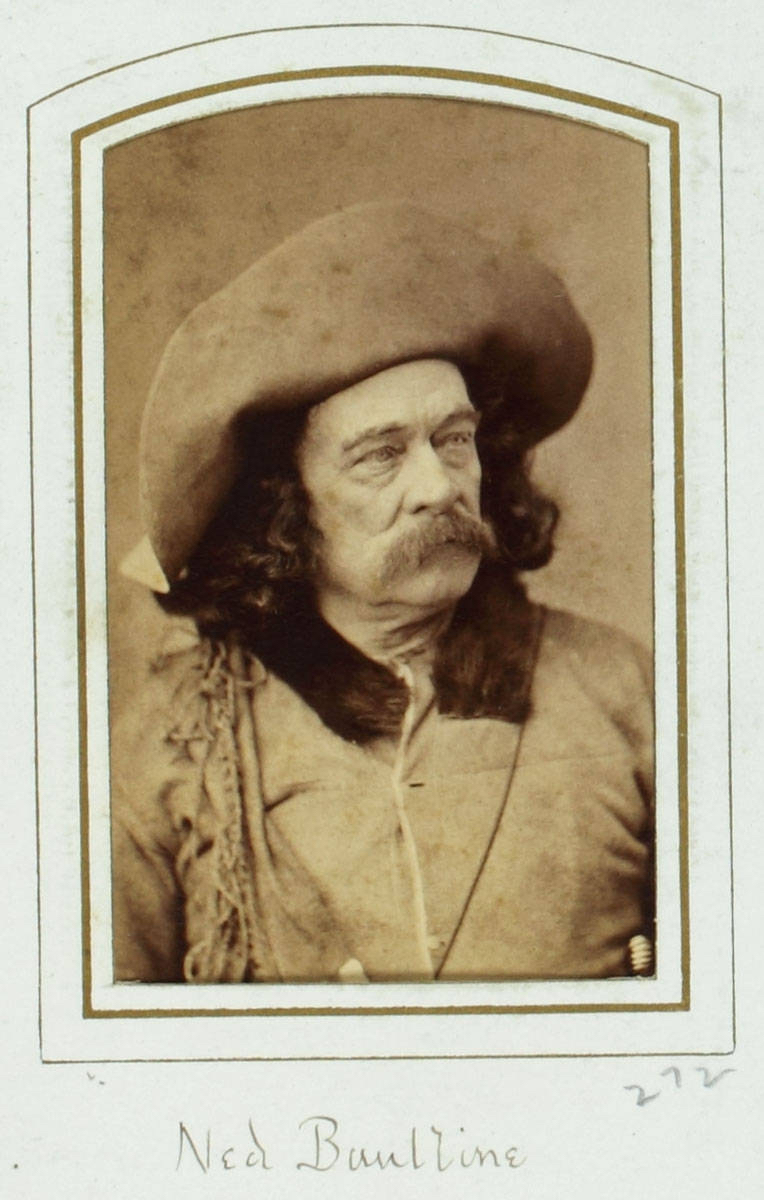 With Ned Buntline, it can difficult to discern where the performance ends and the man begins. The biographies of Frederick Pond and Jay Monaghan are rife with factual and chronological inconsistencies. In a biographical entry in The House of Beadle and Adams, Albert Johannsen struggles to disentangle facts from performance in Buntline’s “lurid and varied” life and adventures. Accounts cannot be faithfully corroborated against Buntline’s writings, as he routinely misrepresented the events of his life. As Johannsen puts it, “Even Judson’s own accounts of his adventures are so conflicting that one must believe he was sometimes amusing himself at his listener’s expense.” Johannsen is perhaps too generous. Given the entanglement of his biography, political activity, and popular writing, self-aggrandizement served Judson’s self-enrichment. The entanglement of the man (Judson) and the persona (Buntline) is articulated in the titles of his two biographies, both of which promise the “life and adventures” of his self-fashioned pseudonym, “Ned Buntline.”
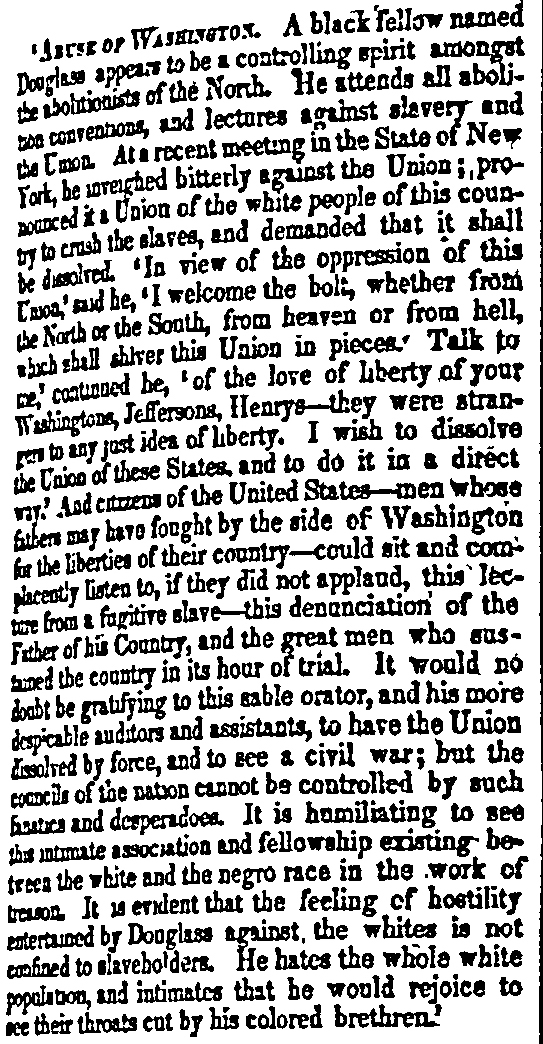
From contemporaneous news reports, we know that Buntline chased the spotlight. He was a forceful proponent of New England temperance movements, though he regularly showed up drunk to the rallies. He railed against violent Irish immigrants and was routinely jailed for bar brawls and acts of vigilante justice. He attacked Frederick Douglass’s abolitionist speeches, but later raised a company of 200 men to “go to Kansas for the defense of Freedom.” Perhaps the only point of consistency in Buntline’s erratic life was his commitment to nativist politics.
The Know Nothings
Buntline hitched his nativism to a contemporary anti-Catholicism, a mobilizing force in the mid-1830s that wouldn’t find a discrete political vessel for another decade. With the Potato Blight of 1845, Irish emigrated to the United States in droves: 90 percent were Catholic, one-third spoke only Gaelic, and all but a few entered the country without savings. Over the next ten years, nearly three million immigrants entered the United States—more than the seven previous decades combined. By 1855, immigrants amounted to or exceeded native-born populations in Brooklyn, Buffalo, Chicago, Cincinnati, Cleveland, Detroit, Milwaukee, and New York.
Buntline helped to shape and popularize the fledgling nativist movement. The American Republican Party, organized in New York in 1843, wrote the template for other nativist organizations, calling for a 21-year probationary period before naturalization, use of the King James Bible in all common schools, and the election and appointment of only native-born Americans to public office. After winning elections in Massachusetts, New York, and Pennsylvania, the American Republicans organized a national convention that met in Philadelphia in 1845, where delegates renamed themselves the “Native American Party” and began to promote their agenda through a network of closed, semi-secret fraternal orders. Traveling to New York, Buntline joined one of the first lodges, the Order of United Americans (OUA), which provided a blueprint for later orders. Around the same time, Buntline revived his magazine Ned Buntline’s Own, with an increasingly nativist bent.
While Buntline was involved in American nativist movements writ-large, he is perhaps best known for the Astor Place Riot. At the center of the riot was a casting dispute. Producers at the Astor Place Opera House cast English actor William Macready to play Macbeth. Nativists wanted American Edwin Forrest. Ned Buntline produced and distributed the following handbill charged with inciting the riot.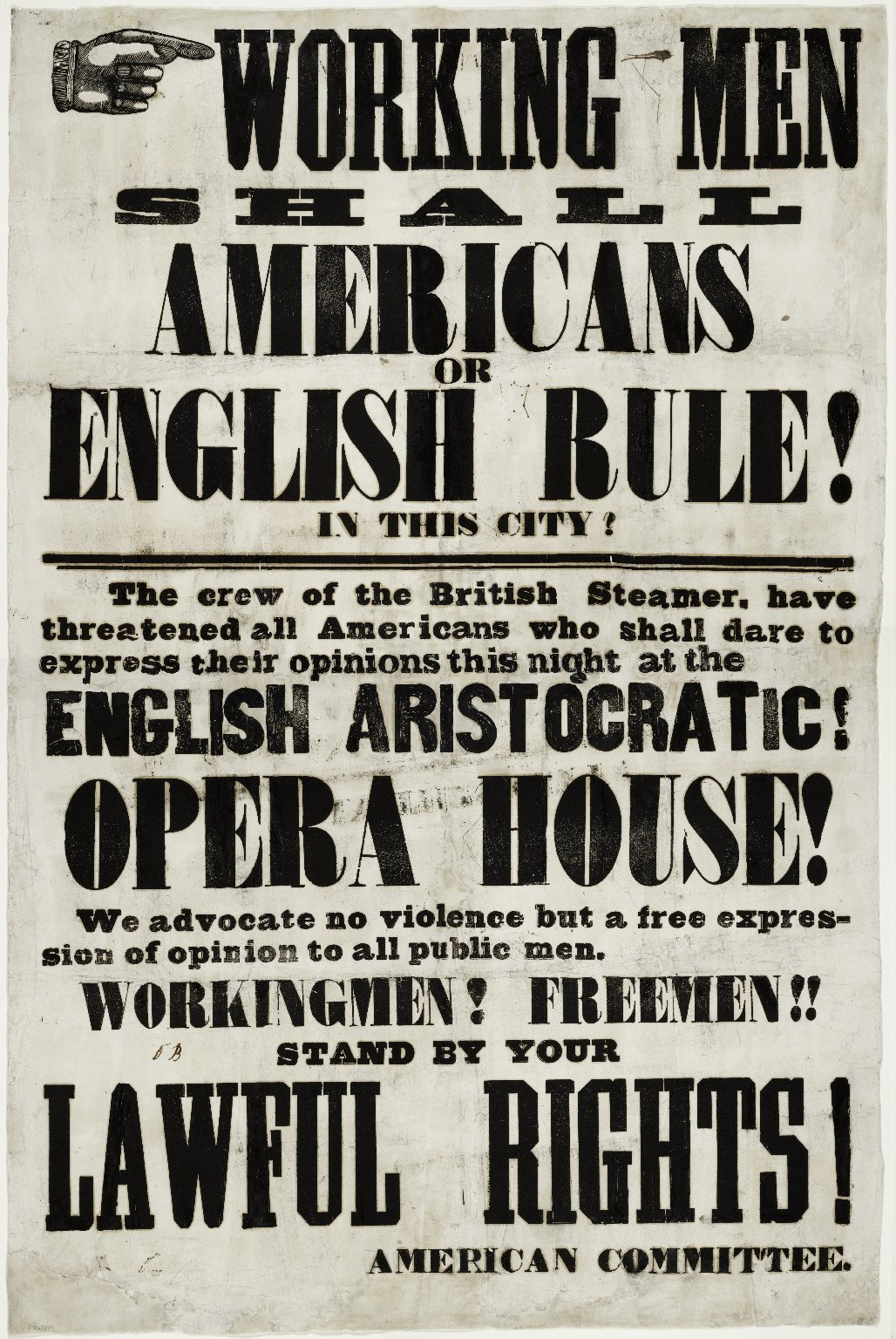 When the play opened, as many as 10,000 people filled the streets surrounding the theater. After Buntline and his followers threw stones at the theater, fought police, and tried to set fire to the structure, soldiers opened fire killing 22 rioters and wounding more than 150 others. Arrested as a leader of the mob, Buntline was sentenced to a year at Blackwell’s Island. When he was released, he was a national celebrity, escorted home by torchlight parade.
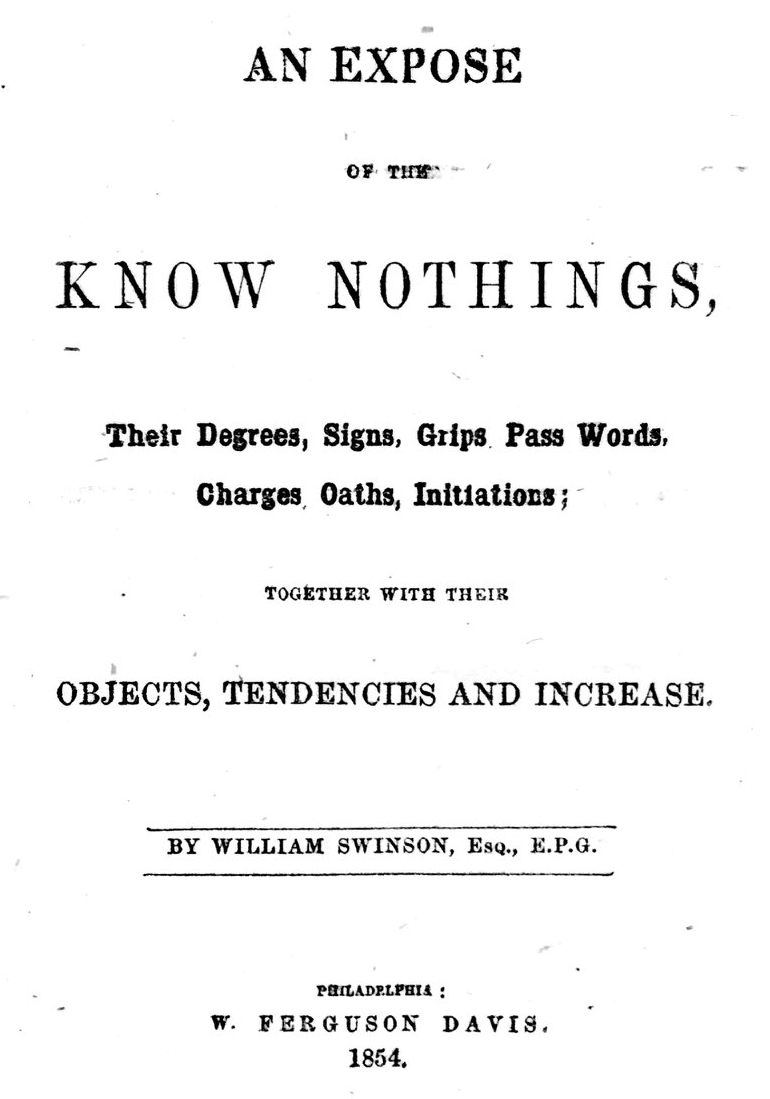 Throughout the early-1850s Know Nothingism thrived in secret fraternal lodges modeled on Buntline’s order (OUA). In fact, the term “Know Nothing” derived from members’ practice of feigning ignorance when asked about the organization. When forming a new lodge, Know Nothings often struggled to find secret meeting spaces. Know Nothings also traded in an array of esoteric rituals—elaborate handshakes, oaths of allegiance, vouching, and hierarchical titles—that garnered significant public curiosity. At the Library Company of Philadelphia, I found half a dozen “exposes” published in 1854 alone, each promising to unveil esoterica of the strange order. One expose, published by a “Know Something,” issued the following warning:
our country is imperiled; not by the threatened invasion of foreign armies, nor by sham demagogues conjuring up ‘gorgons and chimeras dire,’ in regard to local question, but by this secret and insidious league, solemnly sworn, in its native pride and power, to carry triumph over the entire western world, in spite of the rest of mankind.
Despite criticism, anonymity and secrecy proved an asset to movement.
Anti-party sentiment lifted Know Nothingism to its high-water mark in 1854. With the passage of the Kansas-Nebraska Act, Northerners abandoned the Whig party in droves, convinced that their elected officials had lost touch with the popular will. A number of Southerners had grown disillusioned with the Democrats, who had failed to enact temperance legislation. The Know Nothings benefited from frustrations with the status quo, their membership catapulting from 50,000 in June to over a million that October.
The American Party
Ned Buntline led the effort to nationalize the Know Nothings by jettisoning the secret lodges and transforming it into a new “American” party. By 1855, the party’s secrecy had become a liability. Legislators railed against the party’s “dark lantern” tactics, turning the suspicions Know Nothings had activated for electoral gain against them. The Columbian Register named Buntline the architect of those secret machinations. In satirical poem entitled, “Charge of the Hindu Thugs On Foreigners,” the writer unmasks the nativists as the real Hindoo thugs:
Into a fog of secrecy /Sneaked several hundred, / For up come an idea from / Ned Buntline plundered. ‘Sneak ahead, Hindoo thugs!’ ‘Down with the Greeks,’ Buntline said. / Into a fog of secrecy / Sneaked several hundred.
Buntline clearly took note, and soon led a campaign to disband secret lodges. Soon after, Know Nothings rebranded, adopting the “American” party label, and committed to conduct political campaigns openly, with all the trappings of a mass political party. This new phase of the American Party is perhaps best embodied by its candidate, Millard Fillmore, who ran on patriotic anti-Catholicism and a conservative unionism intended to appeal to both working-class northern nativists and former cotton Whigs who fretted sectional polarization. That coalition did not hold. In fact, the campaign failed spectacularly—Fillmore carried just one state (Maryland)—and so did the American Party, which all but disappeared.
Perhaps as much as Fillmore, Buntline was the face of that failed nativist movement. In the aftermath of election, he appears in op-eds and political cartoons alongside Fillmore, often depicted as the villain who lured the former Whig President into darkest fissures in American politics. In a pro-Buchanan op-ed published that December, the writer triumphantly (and prematurely) declares “sectionalism has met its death.” In a lithograph entitled “The Morning after the Election,” John Magee depicts the triumphant James Buchanan seated below a trellis of grapevines, basking in the election results as he claims the mantel of unionism:
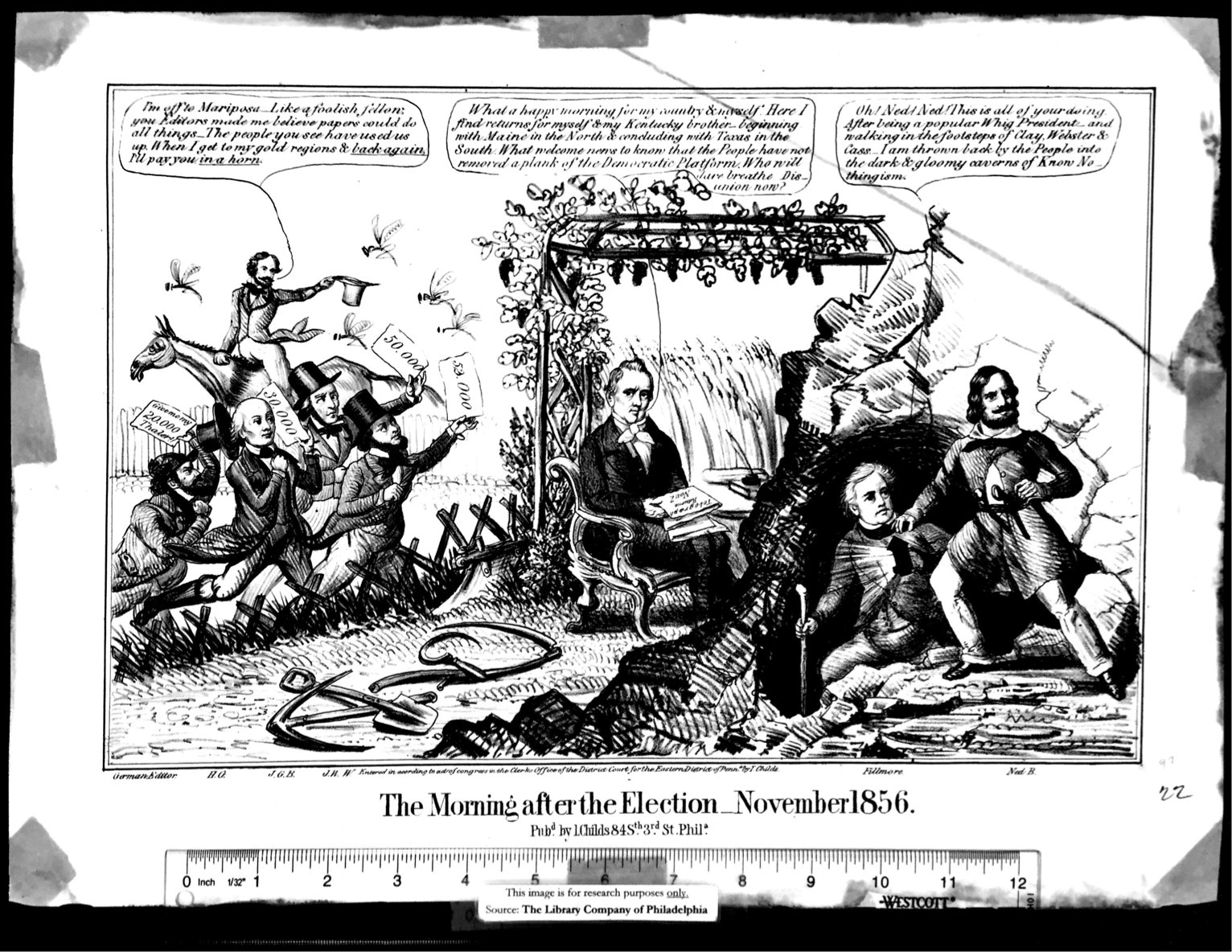
James Buchanan: What a happy morning for my country and myself…What welcome news to know that the People have not removed a plank of the Democratic Platform. Who will dare breathe Disunion now?
Millard Fillmore, emerging from the mouth of a cavern, holding a lantern: Oh! Ned! Ned! This is all of your doing. After being a popular Whig President—and walking in the footsteps of Clay, Webster & Cass. I am thrown back by the People into the dark & gloomy caverns of Know Nothingism.
Saul Sabberday
In the wake of the disastrous 1856 election, Buntline sought to reclaim that mantel. As the slavery debate intensified after the Dred Scott decision, Buntline’s historical romances offered white nativists a nostalgic reprieve from those contemporary debates. Buntline’s stories imagined a time when America was great again. After a lengthy dalliance in nativist politics, Buntline returned in 1858 to nativist fiction.
Saul Sabberday is the story of a pitiable young “idiot” Quaker, who pines to fight the British alongside his brothers, Simeon and Seth. Despite modest resistance from his mother Mrs. Sabberday, he joins the fight, weaponizing his perceived idiocy to spy on the British for General Washington. Meanwhile, his sister, Ruth, is abducted by the infamous traitor Benedict Arnold—who else?—during which she connects with Lizzie, a local friend, and Luliona, a Seminole princess, the three of whom spend the novel defending their honor from various scoundrels. Through military service, Sabberday improves his mental and physical faculties and wins the love and obedience of Luliona. The novel concludes with the end of war, the restoration of peace, and a trio of marriages that formalize a new, capacious American family: Simeon weds Lizzie; Ruth weds a naval officer; and Saul weds Luliona, a mixed-race princess who transforms into a paragon of respectable white womanhood.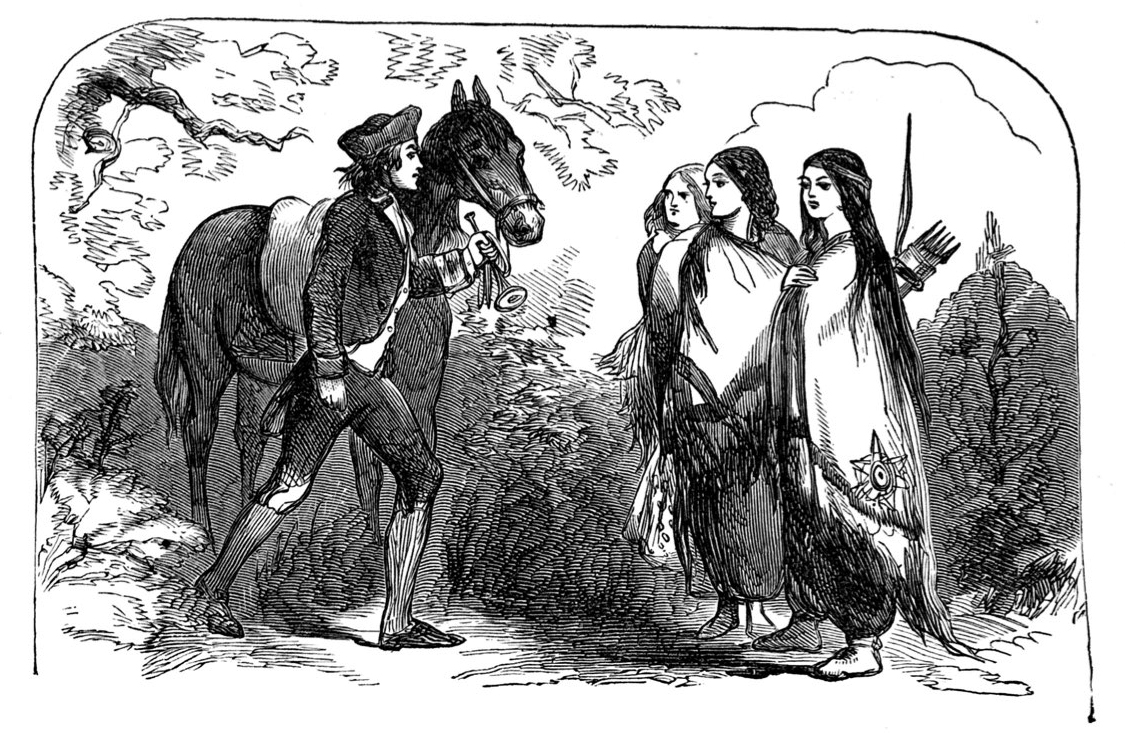
All three Quaker sons are enthusiastic patriots who serve in the Continental Army, authorize the godly mission of the colonists, and find themselves improved through their service. Buntline measures the brothers’ fitness in terms of physical features and spiritual bona fides. Simeon is introduced “a christian and a solider—for both can be united, though, alas, they seldom are.” By uniting patriotism and piety, the Quaker family sacralizes both the colonial cause and its leaders. Simeon vouches for the spiritual credentials of General Washington, telling his mother, “He is one of the best men, utterly devoid of pride or haughtiness, and christian in all his ways!” The relationship is reciprocal, whereby each of the brothers’ physical and spiritual service to General Washington improves their worldly stations.
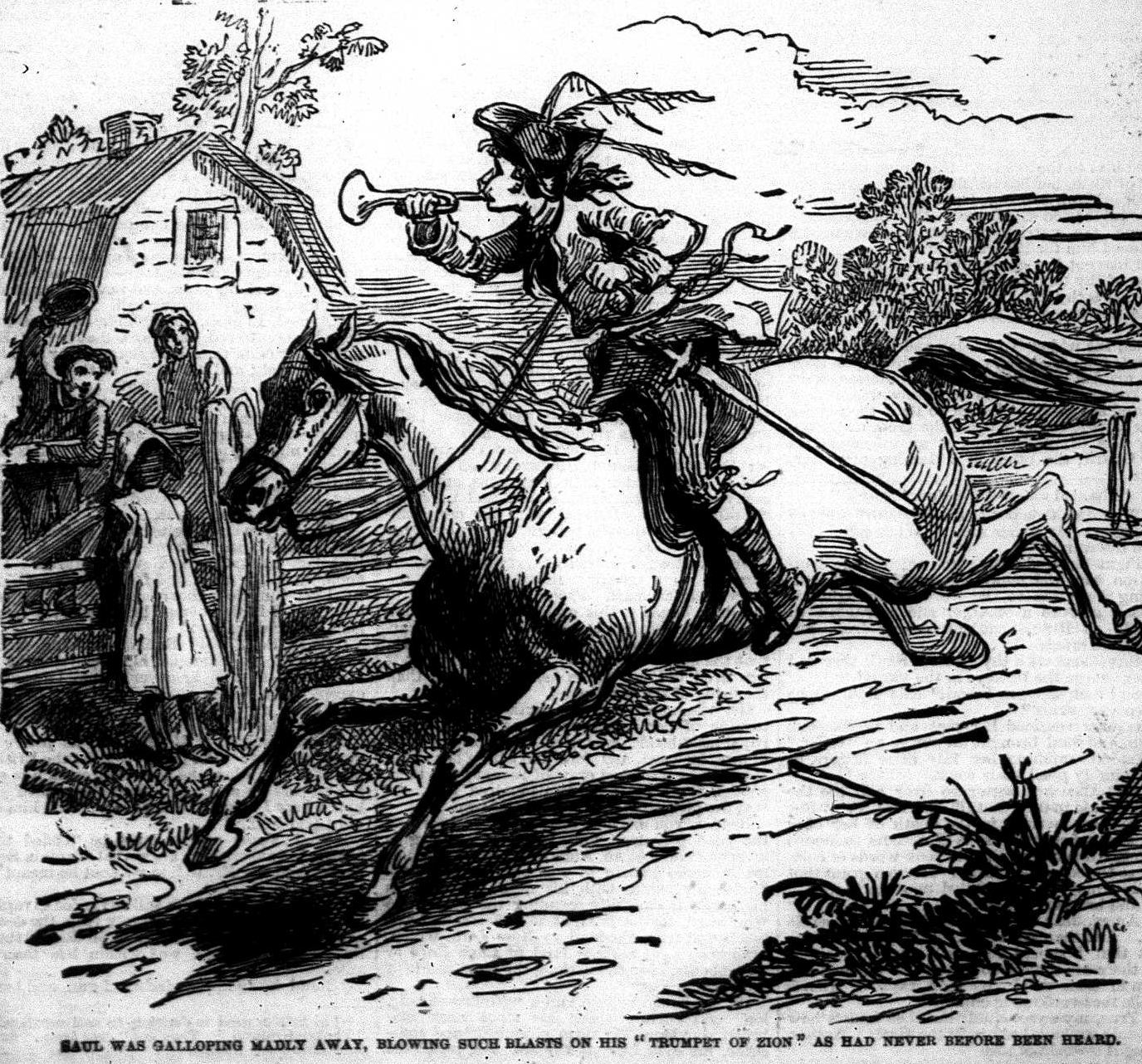 Perhaps most significantly, military service transforms the novel’s titular idiot spy into a revolutionary hero. While Saul pines to follow his brothers into war, his imbecility disqualifies him for service. In the early pages of the novel, he is a figure of ridicule and pity. He dons a homemade Continental uniform, an old hat stuffed with rooster feathers, whistles Yankee Doodle, and chases his mother’s turkeys with a “piece of board, whittled into a rude resemblance of a gun.” As the war unfolds, Saul plays up his idiocy around the British troops and gathers intelligence for Washington. In exchange for his service, Saul experiences both physical and mental conversion. He exchanges his homespun uniform for a soldier’s accoutrements: “a pair of dragoon pistols of immense size…which Washington had given him.” In the final pages, Buntline observes the “wonderful change” in Saul:
A wonderful change has been wrought within that boy. The scenes through which he has passed, while they developed his physical powers, have also strengthened his mind. No longer is he looked upon as an idiot or a fool—his courage is acknowledged on every hand, from the Commander-in-chief to the followers of the camp. He still is eccentric, but he is sagacious, devoted, patriotic—one of whom we may well he proud! Oh, that our mother could have lived to see him as he is—and to know that America was free and triumphant (92).
Military service, which proves salubrious for Saul’s physical and mental powers, refashions him into a revolutionary hero. While that transformation serves his interests—his performance in battle wins him a wife—it also honors his country and his family.
What does it mean for Buntline to imagine Quakers as violent revolutionaries in the context of a nativist agenda? After all, for most Quakers the revolution and its aftermath was a terrifying period in American history.
The end of the war unleashed a wave of mob violence in the streets of Philadelphia. On the night of October 24, 1781, triumphant patriots marched on any home that wasn’t illuminated in celebration. Prominent Quakers, who had publically abstained from the war effort, were the first to be targeted, as Elizabeth Drinker recorded in her diary:
Genl Cornwallace was taken; for which we grievously suff’d on the 24th. by way of rejoyceing—a mob assembled about 7 o’clock or before, and continued their insults until near 10… [S]carcely one Friends House escaped we had near 70 panes of Glass broken the sash lights and two panels of the front parlor broke into pieces—the Door crak’d and Violently burst open, when they threw Stones into the House for some time but did not enter—some fard better and some worse—some Houses braking the door they enterd, and destroy’d the furniture &c—many women and Children were frightned into fits, and ‘tis a mercy no lives were lost (Drinker 393).
A mob of axe-wielding men assailed Quaker homes, smashing doors to splinters, prying loose shutters, and even throwing flaming materials into a house. Elizabeth’s brother-in-law, John Drinker, was reportedly dragged through the streets and beaten, his shop ransacked. The violence was widespread enough to attract the attention of non-Quakers. The representative of the city, Jacob Hiltzheimer, acknowledges the mob violence in his 1781 diary at the American Philosophical Society:
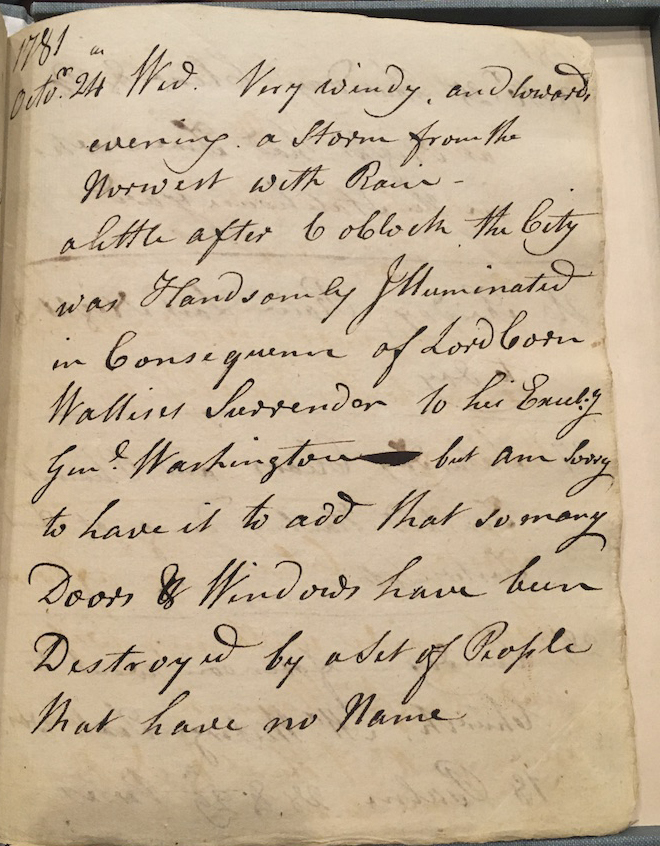
a little after 6 o’clock the City was Handsomely Illuminated in Consequence of Lord Cornwallis’s Surrender to his Excel. Gen. Washington but am sorry to have it to add that so many Doors and Windows have been Destroyed by a set of People that have no Name
Buntline’s Quakers fare much better. If Cornwallis’s surrender unleashed a night of terror for Philadelphia Quakers, in Buntline’s account, it provides Friends an occasion to demonstrate their allegiance to the American cause. Far from his native Philadelphia, Seth Sabberday has no time to celebrate Cornwallis’s surrender, for he’s too busy serving his commander, General Washington. As captain of an American brigantine, Sabberday captures a British transport ship, where he confronts a cowering Benedict Arnold:
Open not your lips to me, you black-hearted traitor!” said Seth, bitterly. “Were you not protected by this pass form Excellency, George Washington, which guarantees the safety of all on board this vessel, I would take you on board my brig and swing you by the neck from her yard-arm (36).
Whereas, historically, peaceable Friends were subject to charges of loyalism or, worse, treason, Seth Sabberday reverses the model, assailing the exemplar of villainy (Benedict Arnold) on behalf of the exemplar of heroism (George Washington). His passion for the revolutionary cause is second only to his commitment to his general. How is a reader to reconcile these two scenes? If Sabberday is historical fiction, from where does Buntline draw his fighting Quakers?
The Free Quakers
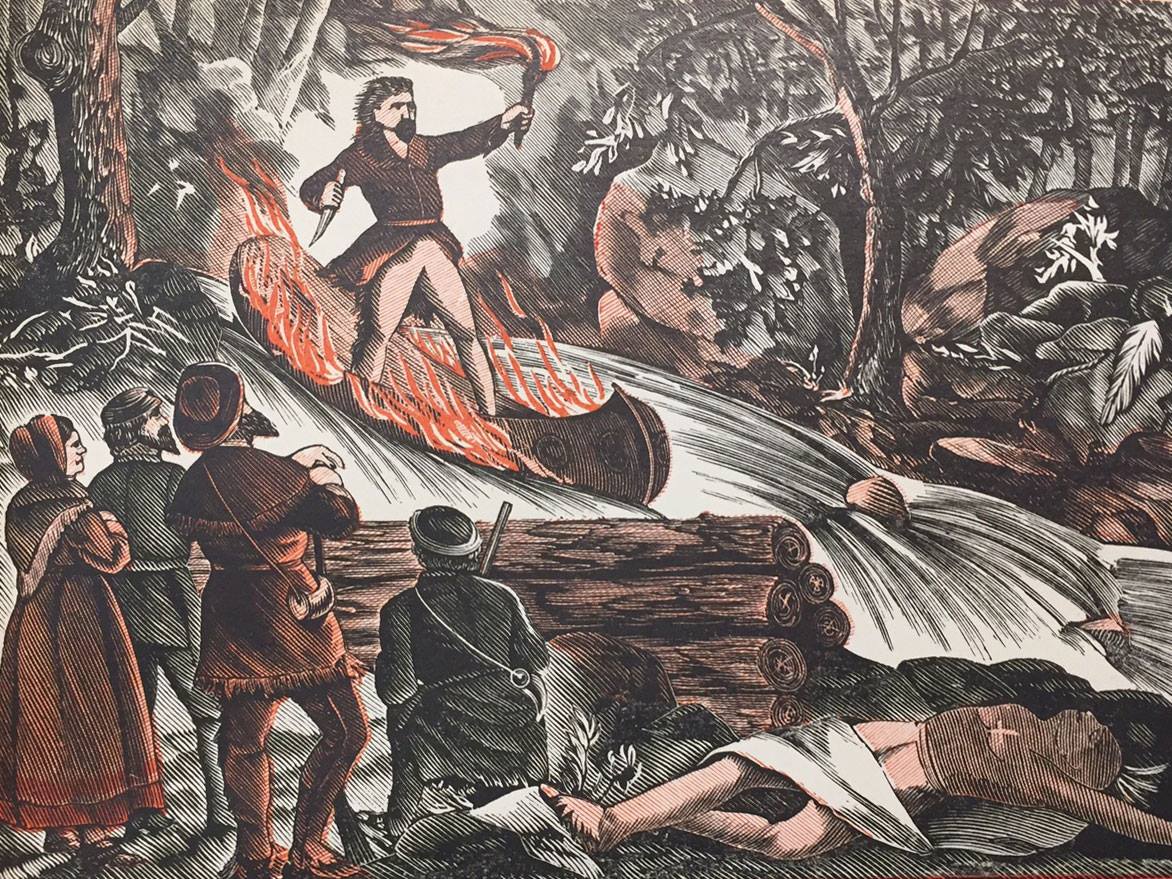 The myth of the fighting Quaker is nothing new to American literature, particularly for those seeking to authorize the violence of settlement, slavery, and westward conquest.
Buntline uses Friends’ well-known historical pacifism to amplify the crises of conscience that other colonists faced. In the early pages of his novel, Mrs. Sabberday bemoans the dangers that await her newly-enlisted sons, “Woe to the tyrant who has forced this thing upon a peaceable and God-fearing people!” (9). While mothers across the American colonies may have shared her sentiment, few would have grappled with her unique crisis of conscience. Both Mrs. Sabberday and her sons were committed to a Peace Testimony that prohibited even oblique participation in the war effort. Friends who signed oaths allegiance or paid taxes to support militias faced increasing disciplinary measures, including expulsion from the Society of Friends. Many of those expelled Friends later founded a breakaway sect, the Religious Society of Free Quakers, which excused participation in the war.
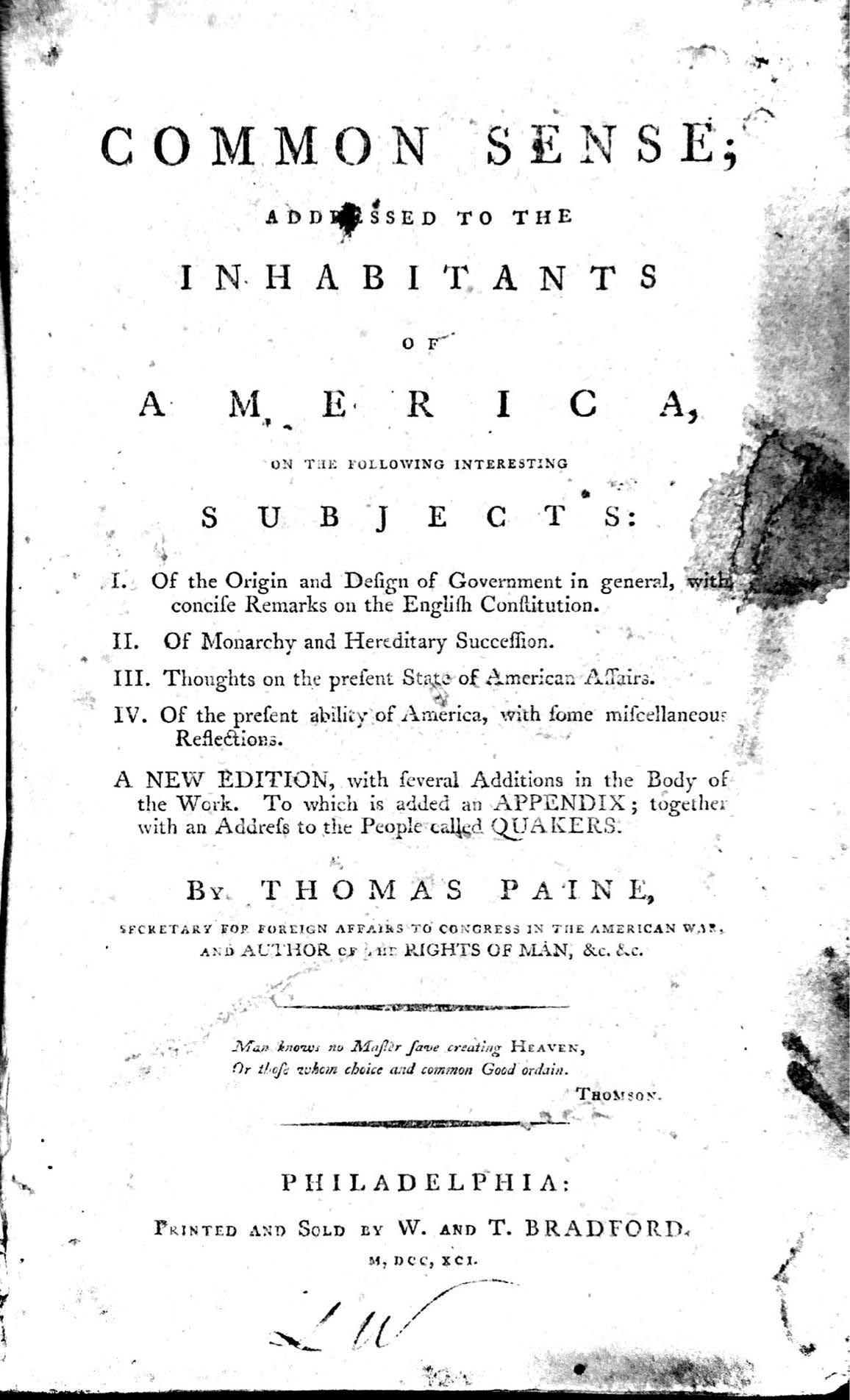 The Free Quakers—a tiny minority of a small denomination—disbanded before Buntline began his writing career; but I suggest that the mythology of the fighting Quaker—so moved by the colonists’ cause to take up arms against his English brethren and to risk religious disownment—was already engrained in the revolutionary imaginary. I don’t have time now to tell that story now, though my larger project traces the publication history of the “Epistle to Quakers” in Common Sense, as well as Thomas Paine’s correspondence with notable Free Quakers. Today, I want to touch upon how the public writings and high visibility of Free Quaker leadership helped to inject their unpeaceable convictions into the popular consciousness.
Founded by three disowned Quakers—Samuel Wetherill, Timothy Matlack, and Christopher Marshall—
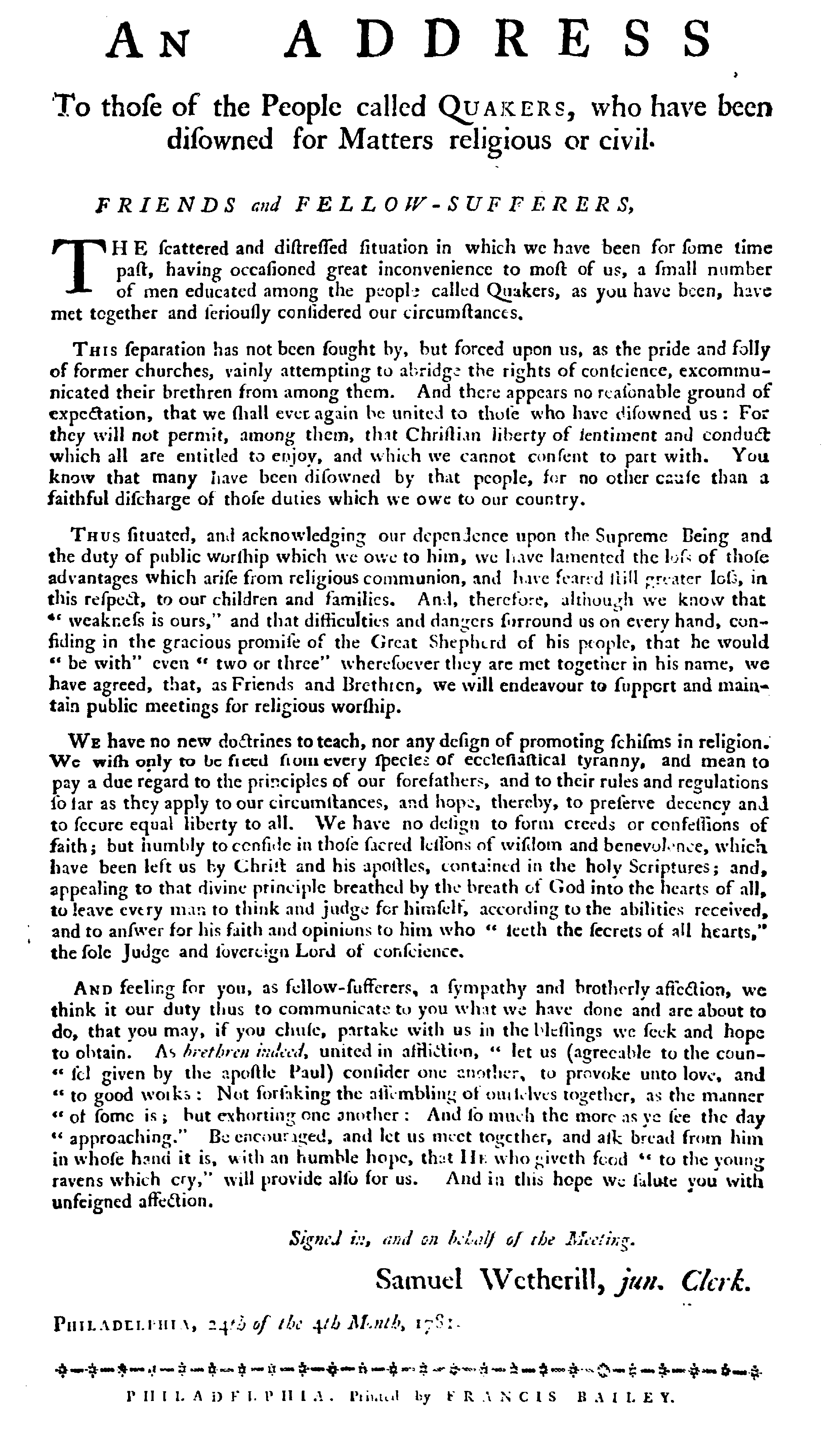
the breakaway sect abolished disownment for offenses related to military service, but otherwise maintained the Society’s “general doctrines, organization and mode of conduct in worship.” In fact, Wetherhill even penned a broadside in the Pennsylvania Gazette, which evangelizes Friends disowned for their involvement in the war.
The leaders of the sect were well-connected with revolutionary leaders. Christopher Marshall’s pharmacy furnished Washington’s troops with medicine, and Marshall cared for wounded soldiers in the hospital of Philadelphia. Samuel Wetherill’s textile factory produced large quantities of woolen cloth for the Board of War. And few colonists were so connected as Timothy Matlack, who served as assistant to the secretary of the Continental Congress, member of the Pennsylvania Constitutional Convention, secretary of the Supreme Executive Council, and delegate to the Second Continental Congress.
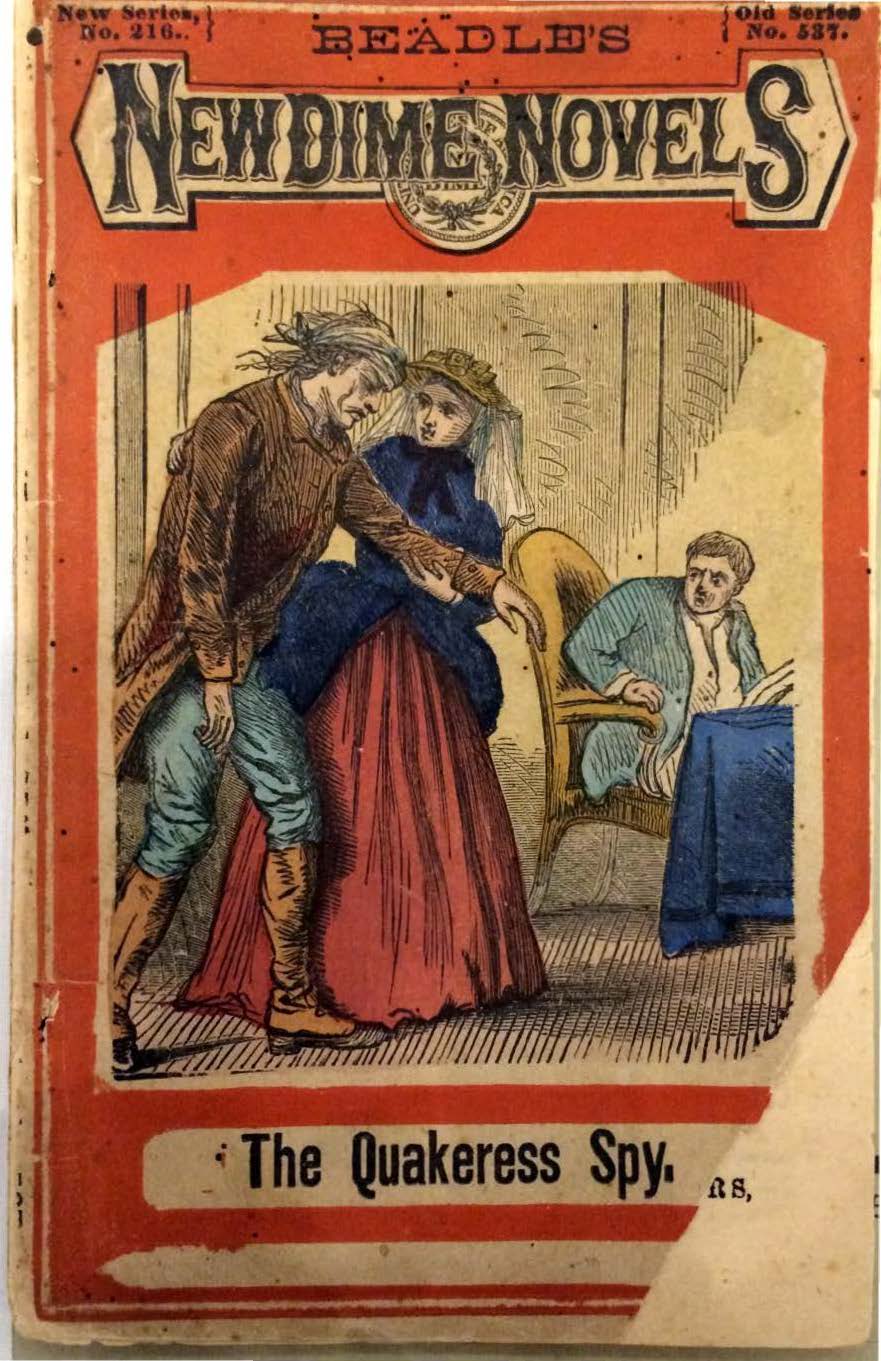 The membership of the Free Quakers was also highly visible through their revolutionary activities. Reviewing the membership rolls available at the American Philosophical Society, I discovered a trove of war figures, some of whom have not previously been associated with the Free Quakers. Peter Thomson printed Continental currency; Benjamin Say represented Pennsylvania in the U.S. House of Representatives; and Owen Biddle, Clement Biddle, William Crispin all served alongside General Washington. Lydia Darragh served as a spy, alerting Washington of William Howe’s plans, and thwarting his attack on Whitemarsh. In fact, Darragh provided the inspiration for a subsequent fighting Quaker dime novel, William Henry Howland’s The Quakeress Spy: A Romance of 1780. Perhaps the most famous Free Quaker listed in the membership rolls is Elizabeth Claypoole, better known by her first married name, Betsy Ross. While her celebrity as stars and stripes seamstress wouldn’t take hold until the centennial, the Pennsylvania fleet was adorned with her flags throughout the war.
Despite its small membership, the Religious Society of Free Quakers was well-stocked with war heroes whose stature would only grow. By providing those patriots with a meeting house, the sect institutionalized their association with the Society of Friends—at least in the eyes of non-Quakers—and at a germinal moment for the young republic. With the end of the war, the republic faced a host of political challenges. The fighting Quaker, a conflicted figure who set aside sectarian politics for the good of the republic, was a potent myth, not just during the Constitutional Convention, throughout which federalists railed against factional interests, but into the late-antebellum period, when populists sought to subordinate sectarian debates to a transregional white identity.
Under what conditions is it acceptable to violate one’s conscience, and for what cause? For Buntline, a war for the preservation of the union was cause enough. Unlike abolitionist writers such as Harriet Beecher Stowe, who coopted Friends to authorize the cause of abolitionism, Buntline’s fighting Quakers were happy warriors who gladly accepted assimilation into whiteness as reward for violating the Peace Testimony. As a backdrop of great proportion, ideological and geographic schism, and well-established heroes and villains, the American Revolution offered a retreat from contemporary political disputes. Within that frame, the Free Quaker promoted unity in the face of sectarianism. Certainly, the Free Quaker chose a side (the right one) and suffered trials. As important, however, was the justification for participation: in service of peace, prosperity, and patriotism.
While his political movement was all but dismembered by 1858, Buntline reformulates nativist iconography around a vague unionism that would prove well-adapted to the postbellum period. Acknowledging the present pain, suffering, and anxiety, Buntline locates “reward” in a nostalgic past that kindles a shared patriotic feeling available to the most unlikely allies—even Quakers and Indians:
[T]hough this story has been written on a bed of sickness, amid pain and suffering, with a fevered brow and a nervous hand,” the narrator writes in the final paragraph, “I am more than rewarded if I have awakened a few sparks of patriotic fire in apathetic breasts; or, in weaving the woof of romance amid the warp of history, made it more entertaining to the mind of my readers (95).
His evocation of “patriotic fire” revives nativist iconography (the Know Nothing lantern) but detaches it from its recent political failure (the 1856 electoral bloodbath). In this sense, Buntline’s novel begins to reformulate 1850s nativism for the 1860s and 1870s.
If we can draw a lesson from the career of Ned Buntline, it may be that there are no penalties for ideological discontinuity. Nativist movements then and now are uniquely pliable. However, their platforms have been delegitimized before, and they can be again. But make no mistake: this isn’t only a contest of ideas, but also a war over the symbols, mythologies, and stories we tell ourselves about ourselves.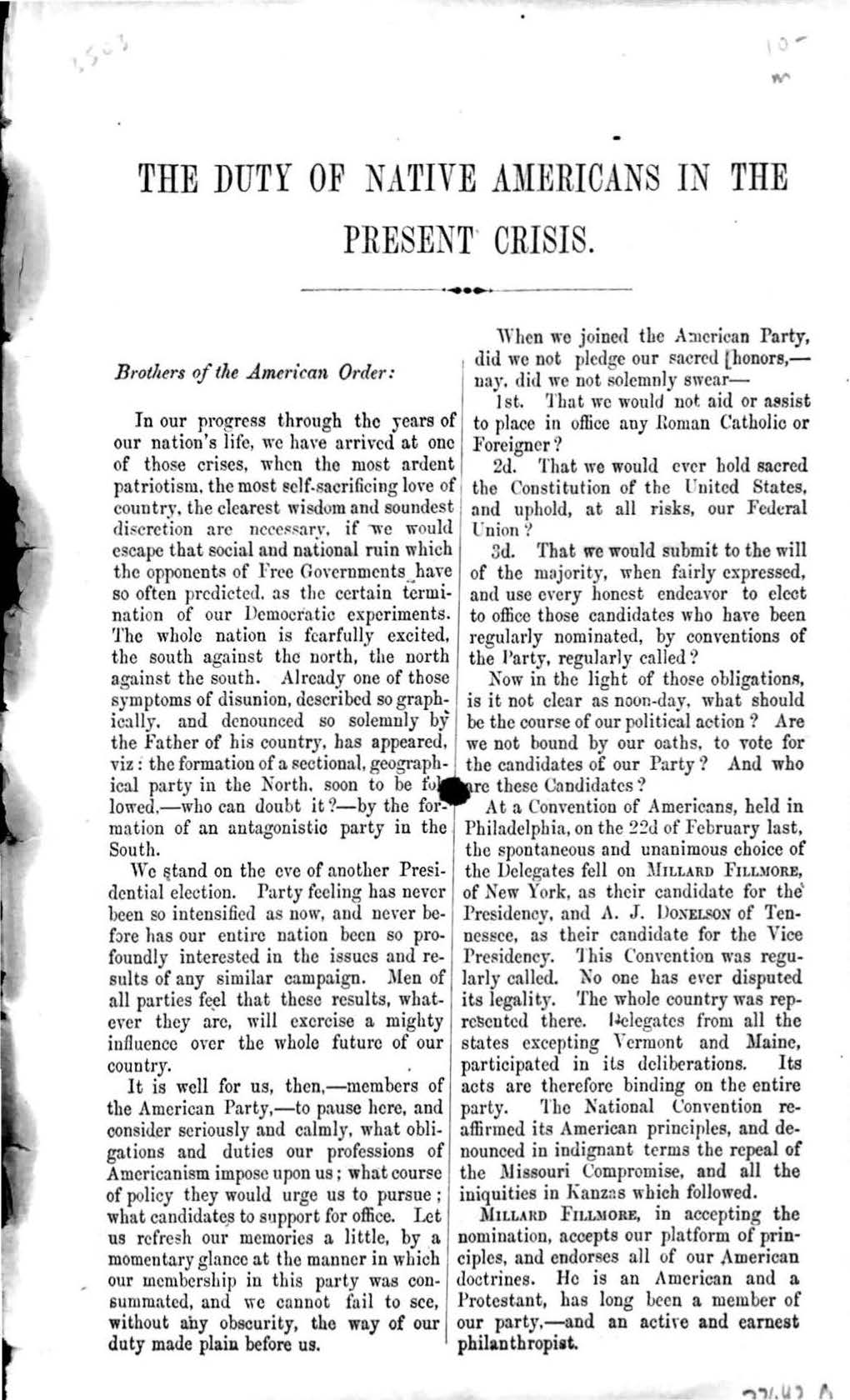
Comments
Comments are closed
0 Comments on the whole Page
0 Comments on block 1
0 Comments on block 2
0 Comments on block 3
0 Comments on block 4
0 Comments on block 5
0 Comments on block 6
0 Comments on block 7
0 Comments on block 8
0 Comments on block 9
0 Comments on block 10
0 Comments on block 11
0 Comments on block 12
0 Comments on block 13
0 Comments on block 14
0 Comments on block 15
0 Comments on block 16
0 Comments on block 17
0 Comments on block 18
0 Comments on block 19
0 Comments on block 20
0 Comments on block 21
0 Comments on block 22
0 Comments on block 23
0 Comments on block 24
0 Comments on block 25
0 Comments on block 26
0 Comments on block 27
0 Comments on block 28